
AI fresh produce order fulfillment and dispatch
A perfect shipment is the right product, in the right quantity, from the right lot, on the right truck, with the right paperwork. Producepak AI checks each of those as the order moves through the building.
From order to truck
Order in
From email, the customer portal, EDI or the chat. Pak-Bot checks stock on hand, incoming deliveries and what is on the packing line before promising quantities.
Plan
The logistics dashboard schedules trucks, assigns several orders per truck, sets loading order and assigns pickers.
Pick
Pickers are guided to the right pallets, chosen by FIFO. A wrong product sounds an alarm and appears on the dashboard.
Load
Pallets are scanned onto the truck; with RFID they are added as they are loaded. Proof-of-shipping photos attach to the order.
Document
BOL, invoice and shipping documents are printed or emailed, the customer gets a shipping alert and the invoice goes to finance.
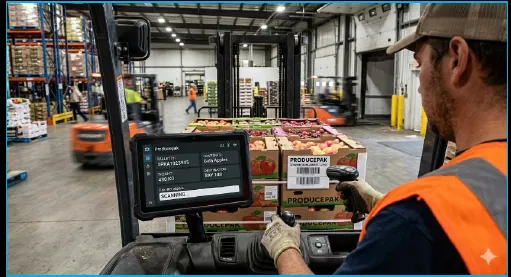
Live pick monitoring
See every shipment for the day and its picking progress, who is picking each order, and an audible alert when a shipment is finished or a wrong pallet is scanned.
Ask Pak-Bot "Orders still being picked" or "What is short on the Loblaws order?" from anywhere.
Order entry cut from 8 hours a day to 2; dumped stock fell from 6% to 3.5%. Customer credits fell from 1.8% to 0.9% of sales after orders came straight from email and picking was checked at the scan.
Questions
Can Pak-Bot tell us if we can fill an extra order?
Yes. It checks stock on hand, incoming deliveries and current packing before answering.
What stops the wrong pallet being loaded?
Each pallet is scanned or RFID-read against the order; a mismatch raises an alarm and is not allowed to ship.
Can we ship mixed loads?
Yes: loose cartons, bins, bulk tote bags, pallets and bulk truck loads, or a mix, with multiple orders per truck.
Put a question to Pak-Bot about your own packhouse
Book a session with a Producepak consultant. You will see Pak-Bot working on real produce data, and talk through your crops, sites, customers and documents.